
KoraCommand for home care agencies
What happened at the visit should not take three phone calls to find
KoraCommand is the platform your agency offers its families, free for every family: one private record where the care plan, the visit notes and the papers live, and a working line from the family back to your office.
First pilot organization signed up — Racheal Diabetes Amputees Foundation, Uganda, November 2026.
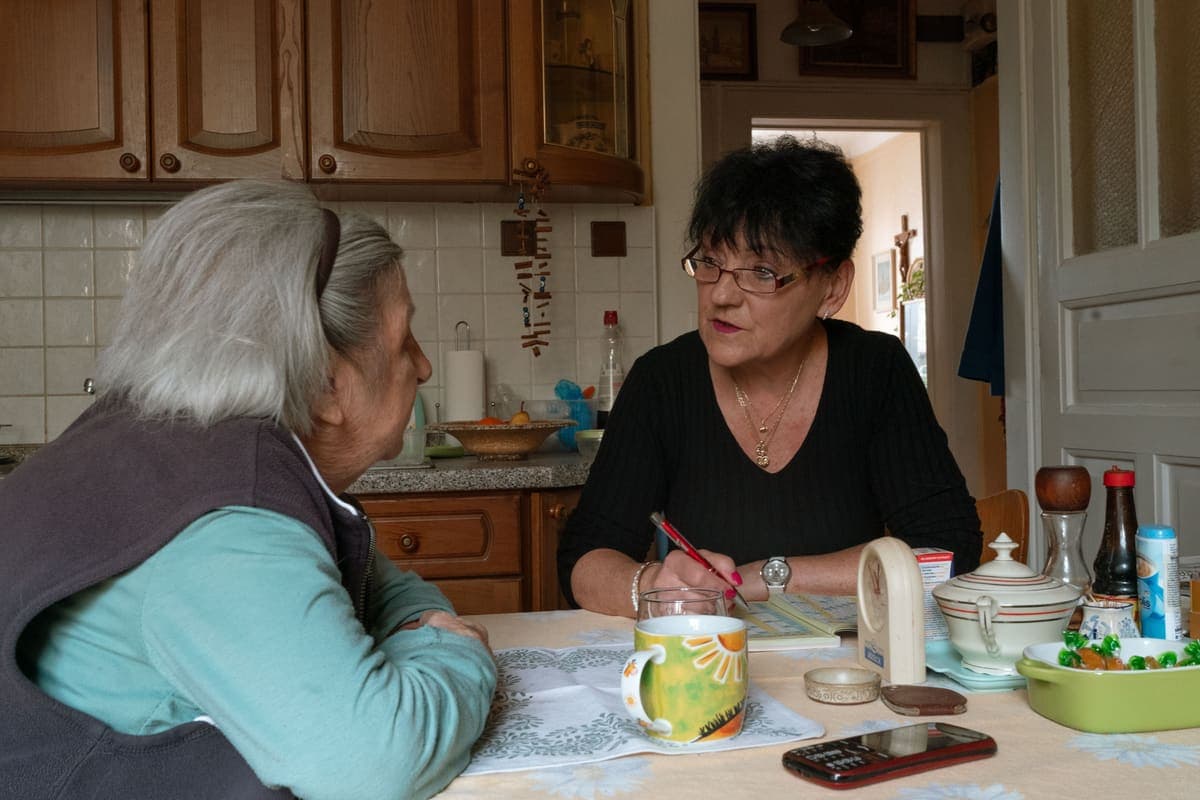
The visit happened. The record of it is in four places.
After every visit, what happened is scattered: a note in the aide's paperwork, a text to the daughter, a sticky note on the fridge, a message the office never saw. The family cannot find it, so the family calls your office to ask what happened. Your office calls the aide. The aide is on the road, with the next client.
Multiply that by every client, every week, and your coordinators spend their day relaying facts that were already written down somewhere, just never in one place the family could open. The calls that remain should be about care. Most of them are about finding the note.
One record the family keeps, one line back to your office
Families stop calling the office for paperwork questions
When the record does not answer a question, the family asks it from inside their record instead of phoning your office. The question arrives in your console's queue; your team answers in writing, once, and the answer lands back in the family's plan, where everyone in the circle can read it. One written answer replaces the relay of calls.
The family's record holds the visit
The care plan, the medicine list, the visit notes and the letters a family receives are photographed once and filed in the family's own record, where the whole circle reads the same page. What happened at the visit stops depending on who remembers the text thread.
Counts that prove the program is working
Your console counts the follow-through: families enrolled, questions waiting and answered, packets and receipts filed. That is the whole of what your team sees. There is no family list in the console and no way to open a family's record from it, by design: your team gets proof the program is working, never the inside of a family's life.
The morning brief, in their own language
Each morning the family gets a short brief of the day: the visits, the medicines, the follow-ups still open, in each person's preferred language, across 35 languages. The plan is in front of the family before your office opens.
Whose record it is
The record belongs to the family, not to the organization
This is the part no back-office tool can offer, because their record belongs to the agency. Here, every family starts with an empty record and is set up personally, and the record stays the family's: your organization never sees inside it, and works from counts only. Health information stays inside the family's own private circle, it is never sold, and the family can export or delete everything at any time. When your staff changes, the family's record does not change hands. It stays whole, with the family.
How a pilot runs
90 days, one measure, one review
90 days, 5 to 8 families
A small first group of families your team chooses, and ninety days. There is no charge for the pilot; terms are set at the day-90 review, not before.
One success measure, agreed with you
Before the first family enrolls, we agree on the single number the pilot will be judged by, drawn from what the console counts. If the number is met at the review, the pilot extends to your next program or setting.
Start with the families who need it most.
Your organization signs itself up, your enrollment page carries your organization's name, and we set each family up personally from there.